






Wizard Tackle
O'shaughnessy Hook Ni-Tin - Fishing Hook Multiple Sizes 10 pack
From $6.54Unit price /Unavailable
Wizard Tackle
Longshank Hook Red - Fishing Hook Multiple Sizes 10 pack
From $6.54Unit price /Unavailable




Top picks for you
-


 Up to $42.49 off
Tidal Trekker
Tidal Trekker 35L Insulated Cooler Backpack
20% OFF$169.95$212.44Savings $42.49Unit price /Unavailable -

-
 $87.55 off
Fishing Superstore
64% OFF$49.95$137.50Savings $87.55Unit price /Unavailable -

-
 $42.05 off
Fishing Superstore
32% OFF$89.95$132.00Savings $42.05Unit price /Unavailable -

GENESIS
GENESIS Stainless Steel Propeller - Suzuki/Mercury/Tohatsu 35/60hp Outboard Motor P13
$504.00Unit price /Unavailable -
GENESIS
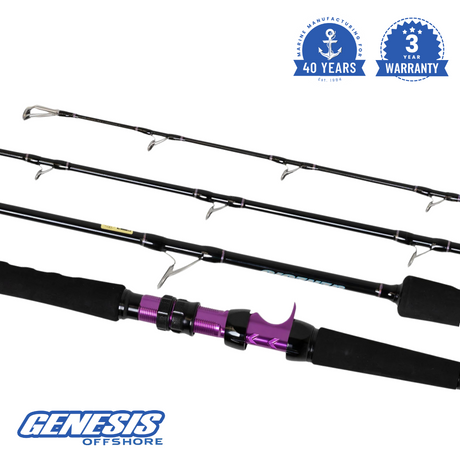
GENESIS 25kg Class I Straight Guide - Carbon Kevlar Jigging Rod
$325.00Unit price /Unavailable -


Tackle and bait do different jobs, and it's worth keeping that distinction clear when you're rigging up. Bait is what a fish decides to eat; tackle (sinkers, swivels, leader and the hardware connecting them) is what gets that bait to the right depth, holds it there against current, and connects it back to your mainline without the fish noticing the hardware. Hooks and jig heads get the full treatment on our dedicated Fishing Hooks page, so this one covers the rest of the rig, the sinkers, swivels and leader that get the bait or lure into position in the first place.
Read More
Sinkers: Running, Fixed or Anchoring
Our Fin Tackle sinker range covers three genuinely different jobs rather than one. Ball sinkers run on a sliding rig, threaded above a swivel so the mainline moves freely through the centre hole, which lets a fish take the bait without immediately feeling the weight, the right call in estuaries and general bay fishing where a natural drift matters more than holding hard on the bottom. Bean sinkers do the same running job but with flatter sides that resist rolling, giving more bottom-holding stability than a ball sinker in rocky ground or a stronger current where snag resistance counts for more. Snapper sinkers are a different shape again, bomb-style with a top eyelet, fixed at the bottom of a paternoster or dropper rig rather than run freely, built for a fast, direct drop through deep water or current on a boat. Star sinkers solve a fourth problem entirely, their pointed shape digs into sand and holds a bait steady in the wash of a beach gutter, where a round or bean sinker would just roll around in the surf. Picking the right shape for the ground and current you're fishing matters more than picking the heaviest one in the packet. Our Sinkers range covers all four shapes.
Swivels and Connecting Hardware
A plain swivel's only job is stopping line twist from transferring back up to your mainline, which matters most when you're using anything that spins, like a running sinker rig or a trolled bait. A snap swivel adds a quick-clip fitting on top of that, letting you change a rig, a sinker or a trace without re-tying, at the cost of a slightly bulkier, more visible connection point. Our range covers both, Fin Tackle's plain Gold Swivels and Gold Snap Swivels, and Austackle's Snaplock Rolling Swivel Coastlock, sized by number rather than breaking strain, so check the size against what you're already running rather than assuming a bigger number is always the stronger choice. Split rings and short lengths of wire trace round out the connecting hardware in this range, wire trace in particular being the one to reach for against anything with teeth or sharp gill plates rather than running straight to a mono or fluorocarbon leader. Our Swivels range covers the full spread.
Leader: Matching Breaking Strain to the Fish, Not Just the Size
Leader breaking strain follows a similar logic to sinker choice: match it to the fish's environment and behaviour, not just its size. Bream fishing in clear estuary water often calls for light fluorocarbon, because these fish see well and a heavier, stiffer leader materially reduces bites. Barramundi sit at the other end of the same principle, needing heavy leader not because barra are dramatically stronger fish for their size but because their mouths are abrasive and the water they're caught in is often murky and snag-filled, where breaking strain matters more than stealth. Toothy or sharp-gilled species are a separate case again, where a short length of wire trace ahead of the hook matters more than the breaking strain of the leader itself. Our range covers this spread with Austackle's Krypto Shock Leader in 50lb, 60lb and 80lb, Fin Tackle's monofilament in 12lb, 15lb and 25lb for lighter work, and Rig Mate's pre-tied dropper loop paternoster rigs from 6lb right up to 100lb for anyone who'd rather buy a rig ready to go than tie one on the water. Our Leader Lines range has the full spread.
The Most Common Mistake
The mistake we see most often with leader is loading up well beyond what the rest of the outfit needs, on the theory that heavier leader can only help. Running an 80lb shock leader on a light bream outfit is a common example. It stiffens the presentation enough to spook light-biting fish like bream and whiting, and it doesn't add any real landing power, because the rod and mainline remain the limiting factor in the fight regardless of how strong the leader is. Leader strength only helps up to the point where it matches what the rest of the setup can actually handle; beyond that, it's just working against the presentation for no benefit. The same logic applies to sinker shape: a snapper sinker bought for boat fishing does nothing useful rigged into a beach setup where a star sinker is what actually holds bottom in the wash.
Keeping a small, organised range of sinker shapes, swivel sizes and leader strengths on hand, rather than one heavy-duty set used for everything, is what lets you adjust to the water in front of you on the day, instead of fishing the same rig regardless of tide, depth or target species.
Frequently Asked Questions
Both run freely on the line above a swivel, but a bean sinker's flatter sides give it more bottom-holding stability and better snag resistance in rocky or fast-moving water. A ball sinker is the better choice when a natural, drifting bait presentation matters more than holding hard on the bottom.
A snapper sinker is fixed at the bottom of a paternoster or dropper rig rather than running freely, built for a fast, direct drop through deep water or current, which is standard for boat-based bottom fishing rather than a drifting estuary bait.
A plain swivel stops line twist and nothing else. A snap swivel adds a quick-clip fitting so you can change a sinker, trace or rig without re-tying, which is worth the slightly bulkier connection if you're swapping rigs through a session.
Against anything with teeth or sharp gill plates. Leader protects against abrasion and improves stealth, but it won't stand up to a bite the way a short length of wire trace will.
Because the rod and mainline are still the limiting factor in a fight, not the leader, so going heavier than the rest of the outfit needs adds no real landing power. It does add stiffness that can spook light-biting fish like bream and whiting.
Yes. Rig Mate's pre-tied dropper loop paternoster rigs come ready to fish in breaking strains from 6lb up to 100lb, which is a straightforward option if you'd rather not tie your own paternoster rig on the water.

Someone bought fishing reels
2 min ago