


Wizard Tackle
Baitholder Hook - Fishing Hook Multiple Sizes 10 pack
From $6.54Unit price /Unavailable

Wizard Tackle
Octopus Beak Circle Hook Coated - Fishing Hook Multiple Sizes 10 pack
From $6.54Unit price /Unavailable
 $5.50 off


Wizard Tackle
Octopus Beak Circle Hook Red - Fishing Hook Multiple Sizes 10 pack
From $6.54Unit price /Unavailable
Wizard Tackle
O'shaughnessy Hook Ni-Tin - Fishing Hook Multiple Sizes 10 pack
From $6.54Unit price /Unavailable
Wizard Tackle
Longshank Hook Red - Fishing Hook Multiple Sizes 10 pack
From $6.54Unit price /Unavailable




Top picks for you
-


 Up to $42.49 off
Tidal Trekker
Tidal Trekker 35L Insulated Cooler Backpack
20% OFF$169.95$212.44Savings $42.49Unit price /Unavailable -

-
 $87.55 off
-

-
 $42.05 off
Fishing Superstore
32% OFF$89.95$132.00Savings $42.05Unit price /Unavailable -

GENESIS
GENESIS Stainless Steel Propeller - Suzuki/Mercury/Tohatsu 35/60hp Outboard Motor P13
$504.00Unit price /Unavailable -
GENESIS
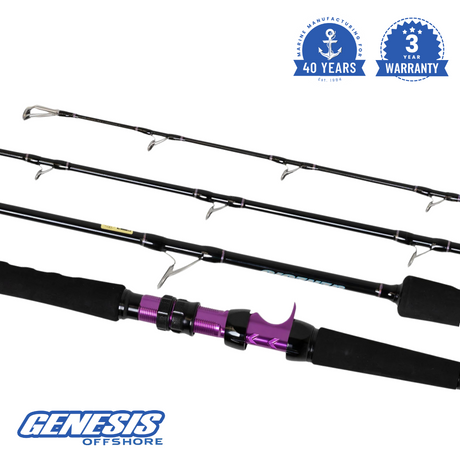
GENESIS 25kg Class I Straight Guide - Carbon Kevlar Jigging Rod
$325.00Unit price /Unavailable -


The most common hook-sizing mistake isn't matching the hook to the wrong species. It's matching the hook to the species at all, instead of to the bait. A whole pilchard jammed onto a hook sized for cubed bait leaves the point and gape buried in flesh, so it never clears the bait on the strike and hook-up rates drop even when fish are actively biting. The same problem shows up in reverse: a hook too large for a thin strip bait or small live offering swings awkwardly and telegraphs itself to a wary fish. Hook size should follow what's on the hook, not just what's swimming past it. Species narrows the range, but the bait picks the exact size within it. This range covers that with two genuinely different product types, bait hooks sold as single patterns or as multi-size ten-packs, and jig heads and jigging assist rigs built for lure and vertical jigging work rather than bait.
Read More
Sizing Bait Hooks to Species and Bait
For whiting and garfish, light-wire, long-shank, thin-gauge hooks in sizes 8, 6 and 4 suit the small baits these fish take, pipi, worm and small strips, without the hook itself weighing down the presentation. Bream and trout call for short-shank, light-gauge hooks, typically sizes 4, 2 and 1, stepping up to 1/0 for larger baits like whole prawns or pilchard fillets. Sydney Harbour bream fishing is a good example of this range in practice: local anglers work baitholder hooks from as small as size 4 down to 1/0 depending on whether they're running bread, nipper or a larger prawn. The hook changes with the bait on any given session, not just with the target species.
Flathead, salmon and school mulloway take a step up again, with sizes 1, 1/0 and 2/0 through to 3/0 covering whole prawns, whitebait and soft plastic rigging, sized to the bulk of the bait being presented. Snapper fishing generally calls for a medium-to-thick gauge hook, often an offset-eye pattern, strong enough to hold through a hard take without straightening. In Port Phillip Bay, the working range for snapper is well defined: a 4/0 chemically-sharpened circle or octopus hook is the main size for most bait presentations, dropping to a 2/0 for pilchard cubes and stepping up to 6/0 for large whole baits fished for bigger fish. Mulloway need a needle-sharp, medium-gauge hook in the 4/0 to 8/0 range, scaled to whether you're running strip baits or larger live and dead baits. Murray cod fishing runs heavier still: 5/0 and 6/0 recurve or circle hooks are the standard for bardi grubs, yabbies and larger bait presentations, sized to hold through a solid, often brutal, take from a big fish.
Wizard Tackle's baitholder, longshank, O'Shaughnessy and octopus beak circle patterns are all sold as ten-packs with the size chosen at checkout, which suits carrying a spread of sizes for one species rather than buying a single size in bulk. Mustad's Chem-Sharp baitholder and Fin Tackle's suicide, longshank and gang hook patterns are sold individually or in small packs for anglers who already know the one or two sizes they use most.
Circle and Recurve Patterns
Circle and recurve patterns, increasingly the default for bait fishing across most of these species, are worth understanding on their own terms rather than treating like a straight swap for a J-hook of the same number. They're designed to roll into the corner of the jaw on a fish that's already turned and moving away with the bait, which is why the usual advice is to avoid a hard strike and instead let the rod load up as the fish takes line. A firm strike on a circle hook is more likely to pull it clear than to set it. Our bait hooks range includes both octopus beak circle patterns and the straighter J-hook styles, so checking which one you've picked up matters as much as the size.
Jig Heads and Jigging Assist Rigs
Bait hooks aren't the only thing in this range. Jig heads and jigging assist rigs are built for an entirely different style of fishing, lure work rather than bait, and they're not interchangeable with the hooks above. Austackle's DeepTrix jig heads run from 1oz up through 8oz for getting a soft plastic down through current or depth, in painted and plain finishes depending on how much extra flash you want. Afishlure's weedless jig head range, Chinlock, BKK Weedless Spinner and Lurelock Weedless Sequin among them, tucks the hook point back against the body to fish soft plastics through timber and other structure without constantly snagging up.
For vertical jigging with metal jigs rather than soft plastics, an assist rig does a different job again: a short length of high-strength cord connects the hook to the jig's head rather than running the hook through the body of the lure, so the hook rides at the point of impact on a strike rather than trailing behind it. Mustad's Ocean Crystal and Slow Pitch Double Assist rigs and Afishlure's single and double feathered assist hooks cover this end of the range, in single and double hook configurations depending on how the jig is designed to be rigged.
Treble Hooks
Trebles come up in two situations: replacing a worn or bent factory treble on a hardbody lure, and rigging a stinger hook behind a livebait or lure for short-striking fish. Mustad's treble hook range covers this, from a standard 1X strong round bend through to the heavier Kaiju saltwater pattern and the 4X strong in-line treble, sized to match the lure or presentation you're replacing hardware on rather than the target species directly.
The Most Common Mistake
Getting hook selection right is less about memorising a single number per species and more about carrying a small spread of sizes for whatever species you're targeting, and picking within that spread based on the bait you've cut or the lure body you're rigging that day. A Sydney Harbour bream session might run through three or four hook sizes across a few hours as the bait on hand changes from bread to nipper to a larger prawn, a Port Phillip Bay snapper trip might sit almost entirely on 4/0s with a handful of 2/0s for cube baits. Buying a small range across the sizes relevant to your regular target, rather than a single size in bulk, is what actually gets used trip to trip.
Frequently Asked Questions
Whiting and garfish suit sizes 8, 6 and 4 on a light-wire, long-shank hook. Bream and trout sit a little larger, typically sizes 4, 2 and 1, stepping up to 1/0 for whole prawns or pilchard fillets.
A medium-to-thick gauge circle or octopus hook is standard. In Port Phillip Bay the working range is a 4/0 for most bait presentations, dropping to 2/0 for pilchard cubes and stepping up to 6/0 for large whole baits.
Bait size changes through a session more often than target species does. A ten-pack across a spread of sizes, like Wizard Tackle's baitholder and octopus beak circle ranges, means you're not stuck re-rigging with the wrong size hook when the bait on hand changes.
Don't strike. A circle hook is designed to roll into the corner of a fish's jaw as it turns away with the bait, and a hard strike is more likely to pull the hook clear than set it. Let the rod load up and the fish hook itself against the pressure of the line.
A bait hook is tied straight to your line or leader and baited directly. A jig head is a hook moulded to a weighted head, built to carry a soft plastic body and be worked with the rod rather than left to sit on bait.
Assist hooks are for vertical jigging with metal jigs. The hook rides on a short cord off the head of the jig rather than through the lure body, so it sits at the point of impact when a fish strikes rather than trailing behind the jig.

Someone bought fishing reels
2 min ago