


 Sold out
 Sold out


 Sold out

 Sold out
Fishing Superstore
3.6m Inflatable Dinghy Boat Tender Pontoon Rescue- Yellow
$1,540.99Unit price /Unavailable Sold out
Fishing Superstore
2.3M Inflatable Boat Laminated Wear Resistant Fishing Boat
$838.99Unit price /Unavailable Sold out
Fishing Superstore
3.0M Inflatable Boat Laminated Wear Resistant Fishing Boat
$868.99Unit price /Unavailable Sold out
Fishing Superstore
Inflatable 4 Person/Seat Towable Boat Flying Fish Blower
$2,268.99Unit price /Unavailable Sold out
Fishing Superstore
$1,540.99Unit price /Unavailable
Fishing Superstore
$1,400.99Unit price /Unavailable Sold out
Fishing Superstore
$1,540.99Unit price /Unavailable Sold out
Fishing Superstore
$1,400.99Unit price /Unavailable Sold out
Fishing Superstore
$1,188.99Unit price /Unavailable Sold out
Fishing Superstore
$1,540.99Unit price /Unavailable Sold out
Fishing Superstore
$1,188.99Unit price /Unavailable Sold out
Fishing Superstore
$1,400.99Unit price /Unavailable Sold out
 Sold out
 Sold out
Fishing Superstore
2.3m Inflatable Dinghy Boat Tender Pontoon Rescue- Red
$1,188.99Unit price /Unavailable Sold out
Fishing Superstore
3m Inflatable Dinghy Boat Tender Pontoon Rescue- Red
$1,400.99Unit price /Unavailable




Top picks for you
-


 Up to $42.49 off
Tidal Trekker
Tidal Trekker 35L Insulated Cooler Backpack
20% OFF$169.95$212.44Savings $42.49Unit price /Unavailable -

-
 $87.55 off
-

-
 $42.05 off
Fishing Superstore
32% OFF$89.95$132.00Savings $42.05Unit price /Unavailable -

GENESIS
GENESIS Stainless Steel Propeller - Suzuki/Mercury/Tohatsu 35/60hp Outboard Motor P13
$504.00Unit price /Unavailable -
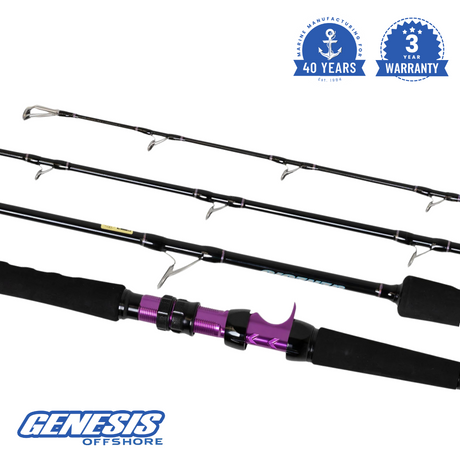
GENESIS
GENESIS 25kg Class I Straight Guide - Carbon Kevlar Jigging Rod
$325.00Unit price /Unavailable -


A tender is the small boat that gets you from the shore to the boat you actually fish from, or from a mooring to the beach, and an inflatable is the version that packs down into a bag. That is the appeal: you can keep it in a car boot, in the cockpit of a bigger boat or in a shed, then pump it up in a few minutes when you need it. The same boats also work as small fishing craft on sheltered water, a role we cover on our boats page, but this collection is about the job of ferrying people and gear. It includes Intex sets in several sizes, our own 3-layer PVC boats in 2.3, 3.0 and 3.6 metres, a laminated 2.3 and 3.0 metre range with extras included, and VEVOR boats that come with oars and a pump.
Read More
What a Tender Needs to Do
A good tender is stable when you step into it, carries the load you actually need to move, and is light enough for you to handle when it is not in the water. Think about who and what will be aboard on a typical trip, including rods, an esky, a battery, an anchor and any dogs or kids, and then choose a boat with a capacity comfortably above that. Tenders usually work in sheltered water, and they are not designed for open sea. Wear a lifejacket every time you get in, and check your state’s boating rules for lifejacket requirements and for any registration or licence needed for the boat and motor you plan to use.
Sizes and Capacities
Go by the kilogram rating rather than the number of people on the label. Our compact Intex boats are rated at roughly 190 to 240kg, which suits two adults and a little gear. The three-person Intex sets sit at roughly 300 to 440kg and the four-person sets at about 480 to 500kg. Our 3-layer PVC boats are rated at 250kg for the 2.3m, 550kg for the 3.0m and 750kg for the 3.6m, and the VEVOR 4-person boat is rated at 499kg, or about 1,100 pounds. At the smaller end, the 2.3m Solar Marine boat is rated at 320kg for three to four people, and the 3.0m is sold for five to six. A heavier boat takes more room to store and more effort to carry, so match the size to the work. If you ferry gear and people often, the extra capacity is worth the weight, but if the tender is mostly an occasional run to a mooring, a smaller one is easier to live with.
Materials and Construction
Our 3-layer PVC boats are built from 1.2mm PVC with heat-welded seams, and the Solar Marine boats use a 0.9mm laminated material. In general, thicker multi-layer fabric tends to resist abrasion from oyster-covered rocks, sand and gravel better, but no inflatable is puncture-proof, and the best protection is how you launch and land it. Lift the boat rather than dragging it over rough ground, keep sharp objects such as hooks and knives away from the tubes, and carry a repair kit. Our PVC tender series has three air chambers, and in general a boat with multiple chambers keeps some buoyancy if one is damaged, which is a useful margin of safety, though it is not a substitute for care.
Floors, Seats and What Is Included
An inflatable air deck floor adds rigidity to a boat, and our 3-layer PVC boats include an anti-stress air deck along with a foot pump and a carry bag. The Solar Marine boats come in a luxury kit that includes paddles, seats, a pump, an air deck, a backpack, a repair kit, rod holders and a leash. The VEVOR boats include oars, a pump, a 7 metre rope, two inflatable seats and a rod holder. Intex sets vary by model, so check what each one includes before you buy. If a boat comes with oars, they are fine for short runs in calm water, but a tender that has to fight a current or a headwind is much easier with a motor.
Powering a Tender
Many of the boats here can take a small motor, and the rating tells you how much. The Seahawk and Mariner boats have motor-mount fittings, and the Mariner 4 has an optional motor mount kit rated for up to a 3hp motor. Our 3.0m PVC boat is rated for 6 to 12hp and the 3.6m for 9.8 to 15hp, though that is much more than most tender runs need, and a smaller motor is lighter to carry. For a quiet, light alternative to a petrol outboard, an electric motor is a sensible choice, and our trolling motors page explains how to match thrust and battery to the weight of a boat. Check the boat’s transom rating before you fit any motor.
Anchors and Fittings
A tender that drifts off while you are loading it is a nuisance, so a small anchor and a length of rope are worth carrying. Our boat anchors collection has options for small craft, and our boat accessories collection covers fenders, cleats and other fittings you might add to the mother boat. If you only need a small, personal craft for fishing a lake or an estuary rather than a tender for a bigger boat, our kayaks and SUPs collection is worth a look as well.
Care and Storage
An inflatable lasts longer if you look after it. Rinse it with fresh water after salt water use, let it dry completely before you pack it, and store it out of direct sun if you can, since UV and heat are hard on any inflatable material. Follow the manufacturer’s guidance on pressure, because an over-inflated boat in a hot car or in direct sun can put stress on the seams. Check the valves and seams when you inflate it, and test the repair kit once, so you know how it works before you need it.
The Most Common Mistake
The mistake we see most often is choosing a tender on price and size alone and forgetting the load. A boat that is rated for the person count on the label may have little margin once you add gear, a battery and a motor, and an overloaded inflatable sits low, handles badly and is less safe. Add up what you will actually carry, then pick a boat rated comfortably above it. The second mistake is not checking what the boat comes with. Oars, a pump and a repair kit are not always included, and finding out on the beach is no fun.
Frequently Asked Questions
A tender, or dinghy, is a small boat used to carry people and gear between the shore and a larger boat, or between a mooring and the beach.
It depends on the load. Add up the weight of people and gear, then choose a boat with a kilogram rating comfortably above it. Our compact boats suit two adults, while the larger ones carry more.
Many inflatables can take a small motor, but you need to check the rating of the specific boat. Our PVC boats are rated for much more power than the compact Intex models.
They can be, when they are used within their rating and in the conditions they are designed for. Wear a lifejacket, avoid overloading and keep to sheltered water.
It depends on the boat and the pump. Larger boats take longer, and a foot pump takes more effort than an electric one, so allow time and try the process at home before you need it.
Rinse it, dry it completely, fold it according to the instructions and store it out of direct sun in a dry place.
Yes, in sheltered water. Some of our boats include rod holders, and our boats page covers fishing use in more detail.
Rules vary by state and by the size of the boat and motor, so check the current requirements from your state’s boating authority before you go out.

Someone bought fishing reels
2 min ago