




 $5.50 off


 $42.05 off
Fishing Superstore
32% OFF$89.95$132.00Savings $42.05Unit price /Unavailable




Top picks for you
-


 Up to $42.49 off
Tidal Trekker
Tidal Trekker 35L Insulated Cooler Backpack
20% OFF$169.95$212.44Savings $42.49Unit price /Unavailable -

-
 $87.55 off
-

-
$42.05 off
Fishing Superstore
32% OFF$89.95$132.00Savings $42.05Unit price /Unavailable -

GENESIS
GENESIS Stainless Steel Propeller - Suzuki/Mercury/Tohatsu 35/60hp Outboard Motor P13
$504.00Unit price /Unavailable -
GENESIS
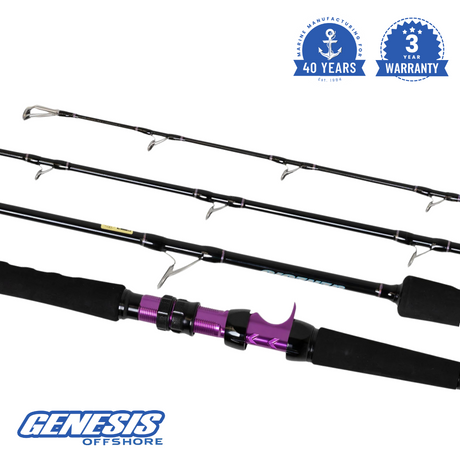
GENESIS 25kg Class I Straight Guide - Carbon Kevlar Jigging Rod
$325.00Unit price /Unavailable -


A jig head is a weighted hook that turns a soft plastic into a lure you can cast, sink and work. It looks like the simplest item in your tackle box, but the weight, the hook size and the style of head change how a plastic falls, how deep it fishes, and how many fish stay hooked. This collection covers the heads we stock: Mustad Musida heads, luminous heads, ball heads, weedless and skirted heads, spinner heads, and the Austackle DeepTrix range of painted heads for heavier work. The right choice comes down to matching three things, which are the weight to the depth and current, the hook to the plastic, and the style of head to the cover you are fishing.
Read More
Weight: Getting the Plastic to the Right Depth
Weight sets how fast a plastic falls, and how well you can feel it. A light head lets the plastic fall slowly and look natural, but it is harder to cast into wind and harder to keep in contact with the bottom in deeper water or current. A heavy head gets down fast and stays in touch, but it falls quickly and can look unnatural to a fish that wants a slow, easy meal. A sensible starting point is the lightest head that still lets you feel the bottom. In our range, the luminous heads come in 1.5, 2 and 3 grams, the Mustad Musida in 3, 5, 7 and 10 grams, and the ball heads from 3.5 to 14 grams. The DeepTrix painted heads run from 1/6 ounce through 1/4, 3/8, 1/2 and 3/4 ounce to 1 ounce, which is roughly 5 to 28 grams, and they suit deeper water, stronger current and larger plastics.
Hook Size and the Plastic
The hook has to suit the plastic. A hook that is too small will not hook fish properly, and a hook that is too big can ruin the way the plastic swims. Our Musida heads pair a weight with a hook size, with the 3 gram on a size 4, the 5 gram on a size 2, the 7 gram on a 1/0 and the 10 gram on a 2/0, and the ball heads run from 3.5 grams on a size 6 up to 14 grams on a 3/0. As a rule, rig the plastic so it hangs straight when you hold it by the head, because a plastic that is bent or twisted will spin on the retrieve. Thread it on carefully, and take a moment to check the hook point sits where it should. The luminous heads use a size 1 hook, which suits small plastics in shallow water.
Standard, Ball and Luminous Heads
A standard head has a moulded weight close to the hook eye, and it falls head-first with a swimming motion. The Mustad Musida is a popular all-rounder, and our ball heads give you a round weight that falls a little more evenly. Luminous heads glow after exposure to light, and they help in low light, in deeper water or in stained water, where the glow gives the fish an extra target to home in on. They are also a good way to experiment with colour without changing the plastic. Our soft plastics collection has the plastics to go with them.
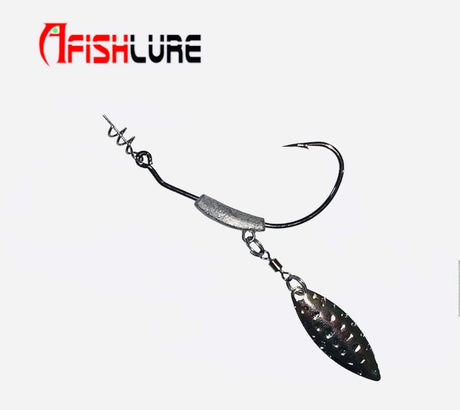
Weedless Heads
Weedless heads protect the hook point so the lure can be fished through weed, around timber and over rock without snagging as often. Our range includes the Afishlure Chinlock weedless heads, which come in packs of five in sizes from 8 up to 3/0, the BKK weedless spinner heads from 4 to 11 grams, the Lurelock weedless sequin heads in 5 to 11 gram sizes, a 10 gram weedless skirted head, and the Mustad Ultra Lock weedless soft plastic hook. A weedless rig is slightly harder to hook fish on, because the point has to push through the plastic first, so use a firm strike. No weedless rig is completely snag-proof, but they let you fish places where an open hook would be lost in a few casts.
Spinner and Skirted Heads
A spinner head adds a small blade that rotates as the lure moves, giving extra flash and vibration that can help in stained water or when fish are slow to react. The BKK weedless spinner heads and the skirted head add movement and bulk, which can help when a plain head is not getting a bite. They are worth trying on a second rod.
Matching Heads to Fish
Different fish call for different set-ups, and the species collections cover the detail. For whiting, light heads of 1.5 to 3 grams on shallow flats are a sensible starting point. For bream, light to medium heads are the usual choice around structure, and our Bream Lure Pack includes jig heads alongside plastics, jigs and vibes. Flathead are usually fished with a head heavy enough to keep the plastic near the bottom, and for snapper over reef, heavier DeepTrix heads help you stay in contact in deeper water. Match the weight to the conditions on the day, not just the species.
Swimbaits and Larger Plastics
Larger plastics and paddle-tail swimbaits need heads with a bigger hook and a heavier weight to carry them. Our swim bait lures page covers the jointed hard swimbaits, and for soft swimbaits the DeepTrix heads with 2/0 to 7/0 hooks are the sizes to look at. A bigger plastic on a head that is too light will drift and swim badly, and one on a head that is too heavy will drop like a stone. Test the combination in the water beside you before you cast it out.
Looking After Jig Heads
Rinse jig heads after use in salt water, dry them and store them in a box that lets air circulate. The hook point is the part that matters most, so check it regularly by dragging it lightly across a fingernail. A hook that skids is dull, and a dull hook costs fish. Replace any head with a bent or rusted hook, and keep a range of weights and hook sizes in the box so you can change as conditions change.
The Most Common Mistake
The mistake we see most often is using a head that is too heavy. A heavy head gets the plastic down quickly, but it also falls fast, looks unnatural and makes it hard to feel a bite, and fish often hit the plastic on the way down. Start light, and add weight only when you cannot feel the bottom or reach the depth. The second common mistake is a mismatch between hook and plastic. A hook that is too small hooks fewer fish, and one that is too big can twist the plastic so it spins on the retrieve.
Frequently Asked Questions
A jig head is a hook with a weight moulded onto it, used to rig soft plastics so they can be cast, sunk and worked.
Use the lightest head that lets you feel the bottom and reach the depth you want. Shallow flats suit 1.5 to 5 grams, and deeper water or current calls for heavier heads.
Match the hook to the plastic. Small plastics suit small hooks, and larger plastics need a bigger hook so the lure swims properly and hooks fish.
A weedless jig head has a guard or weed protector that covers the hook point, so the lure can be fished through weed and snags with less chance of hanging up.
They help in low light and stained water, where the glow gives fish something to home in on. Charge the head with a torch or sunlight before you fish.
Thread the plastic on so it sits straight, with the hook point emerging from the top, and check that the lure hangs straight when you hold it by the head.
One ounce is about 28 grams, so a 1/4 ounce head is roughly 7 grams and a 1/2 ounce head is roughly 14 grams.
Check the hook point regularly and replace any head that is dull, bent or rusted.

Someone bought fishing reels
2 min ago