




Austackle
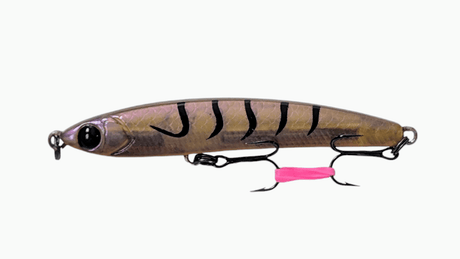
Ranger 40S Suspending Crankbait 40mm 3.3g Magnetic Long Cast
$13.95Unit price /Unavailable


fishing-superstore-au
Harbor Flashy Occy Head Assist I #4 Glow UV
From $14.24Unit price /Unavailable




Top picks for you
-


 Up to $42.49 off
Tidal Trekker
Tidal Trekker 35L Insulated Cooler Backpack
20% OFF$169.95$212.44Savings $42.49Unit price /Unavailable -

-
 $87.55 off
-

-
 $42.05 off
Fishing Superstore
32% OFF$89.95$132.00Savings $42.05Unit price /Unavailable -

GENESIS
GENESIS Stainless Steel Propeller - Suzuki/Mercury/Tohatsu 35/60hp Outboard Motor P13
$504.00Unit price /Unavailable -
GENESIS
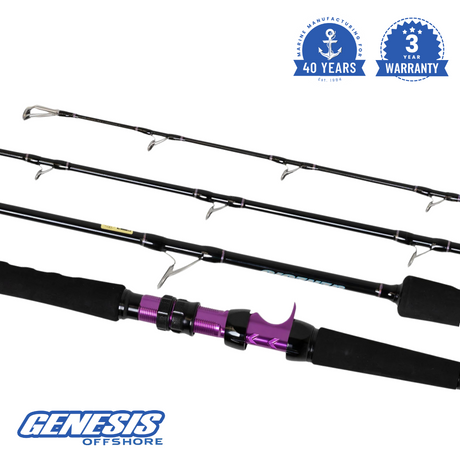
GENESIS 25kg Class I Straight Guide - Carbon Kevlar Jigging Rod
$325.00Unit price /Unavailable -


Trout fishing with lures comes down to two things most anglers underrate: water temperature and retrieve speed. Get either wrong and you can be casting into a lake full of fish and still blank.
Read More
Water Temperature: The Real Lever
Temperature is the real lever. Victorian Recreational Fishing body (VRFish) research puts 12-14°C as the optimal feeding range for trout, with feeding activity dropping off from around 19°C, where growth effectively stops and fish become stressed. Above 24°C, conditions can turn lethal, and that's not a water worth fishing regardless of technique. Trout at that temperature are surviving, not feeding. That's why the best lure fishing in Australian trout water is spring through autumn, with the shoulder seasons, and low light within those seasons, outperforming the middle of a hot day every time.
Where Trout Sit: Structure, Current and Season
Location within the water follows structure and the same temperature logic. In lakes and impoundments, trout hold near emergent dead trees and rocky reefs and drop-offs in the 2-4 metre range, moving toward creek and stream mouths as spawning time approaches. In rivers, they sit in current seams where fast and slow water meet, tucked behind boulders and on the drop from riffle into glide, always positioned to intercept food without fighting the full current. Low light, dawn, dusk and overcast days are when trout feed hardest; brown trout push upstream to spawn in May and June, typically triggered by a fresh or rain event and falling water temperatures.
Season structure matters here more than for most Australian species. NSW trout streams close for roughly four months, June to October, to protect spawning fish, but NSW trout dams and impoundments (Lake Jindabyne, Eucumbene Dam, Oberon Dam, Talbingo Dam and Malpas Dam) stay open right through the closure, which is where lure fishing shifts to during winter. In Tasmania, the highland lakes (Arthur's Lake, Great Lake, Lake King William, Lake Rowallan, Dee Lagoon, Lake Pedder and Lake Burbury) carry lure fishing through most of the year, alongside Lake Eildon in Victoria and the Thredbo River in the Snowy Mountains.
Matching Jighead Weight, Leader and Rod
On technique, jighead weight should match depth and wind rather than fish size. 1/24oz to 1/8oz (1.2-3.5g) covers shallow, calm water; step up to 1/4oz (7g) in deeper water or when wind is pushing the retrieve around. 1/16oz (1.8g) is the most versatile all-round weight on highland lakes and will cover the majority of sessions on its own. Leader runs lighter than most estuary species: 2-10lb fluorocarbon, with 4-6lb adequate for most highland-lake situations where trout are leader-shy in clear water. 4lb braid mainline is enough for most trout work, moving to 6-8lb around heavier timber. Rod choice should stay light: a 6-7ft light to light-medium fast-taper rod matched to a 1000-2000 reel gives you the sensitivity to detect the subtle takes trout are known for.
Retrieve Speed: Slower Than Feels Natural
Retrieve is where most lost fish and blank sessions actually come from. A very slow roll with small pauses is the standout trout technique. Most strikes come as the lure is sinking or paused, not while it's actively moving. In cold water, a hop-and-drop worked off the bottom often out-fishes a moving retrieve entirely.
The Most Common Mistake
The mistake we see more than any other with trout is a soft plastic threaded on crooked, or rigged on the wrong head weight so it doesn't sink or swim straight. It sounds minor, but a mis-rigged plastic kills the subtle swimming action trout are keying in on, and no amount of the right location or timing will fix it. The second most common mistake is simply retrieving too fast. Trout plastics need a genuinely slow roll with pauses, not the burn-and-kill retrieve that works for bass or flathead. Slow down further than feels natural, especially in cold water, and let the pause do the work.
Our trout lure selection is built around this: light jigheads for the finesse work highland lakes demand, and fluorocarbon leader and line classes scaled to the light, clear water trout are usually caught in.
Frequently Asked Questions
12-14°C is the optimal feeding range. Feeding activity drops off from around 19°C, and above 24°C conditions can turn lethal, so that's not water worth fishing regardless of technique. Spring through autumn, with the shoulder seasons and low light within them, consistently outperforms the middle of a hot day.
1/24oz to 1/8oz (1.2-3.5g) covers shallow, calm water. Step up to 1/4oz (7g) in deeper water or wind. 1/16oz (1.8g) is the most versatile all-round weight on highland lakes and will cover most sessions on its own.
Lighter than most estuary species: 2-10lb fluorocarbon leader, with 4-6lb adequate for most highland-lake situations where trout are leader-shy in clear water. 4lb braid mainline covers most trout work, moving up to 6-8lb around heavier timber.
Slower than feels natural. A very slow roll with small pauses is the standout technique, and most strikes come as the lure sinks or pauses rather than while it's moving. In cold water, a hop-and-drop worked off the bottom often out-fishes a moving retrieve entirely.
NSW trout streams close roughly June to October to protect spawning fish, but NSW dams and impoundments like Lake Jindabyne, Eucumbene Dam, Oberon Dam, Talbingo Dam and Malpas Dam stay open right through the closure.
A soft plastic threaded on crooked or rigged on the wrong head weight, which kills the subtle swimming action trout key in on regardless of location or timing. Retrieving too fast is the second most common mistake, trout plastics need a genuinely slow roll with pauses, not a fast burn-and-kill retrieve.
A 6-7ft light to light-medium fast-taper rod matched to a 1000-2000 reel, light enough to give you the sensitivity to detect the subtle takes trout are known for.

Someone bought fishing reels
2 min ago