








Wizard Tackle
Baitholder Hook - Fishing Hook Multiple Sizes 10 pack
From $6.54Unit price /Unavailable-

Wizard Tackle
Octopus Beak Circle Hook Coated - Fishing Hook Multiple Sizes 10 pack
From $6.54Unit price /Unavailable


 $5.50 off




Top picks for you
-


 Up to $42.49 off
Tidal Trekker
Tidal Trekker 35L Insulated Cooler Backpack
20% OFF$169.95$212.44Savings $42.49Unit price /Unavailable -

-
 $87.55 off
-

-
 $42.05 off
Fishing Superstore
32% OFF$89.95$132.00Savings $42.05Unit price /Unavailable -

GENESIS
GENESIS Stainless Steel Propeller - Suzuki/Mercury/Tohatsu 35/60hp Outboard Motor P13
$504.00Unit price /Unavailable -
GENESIS
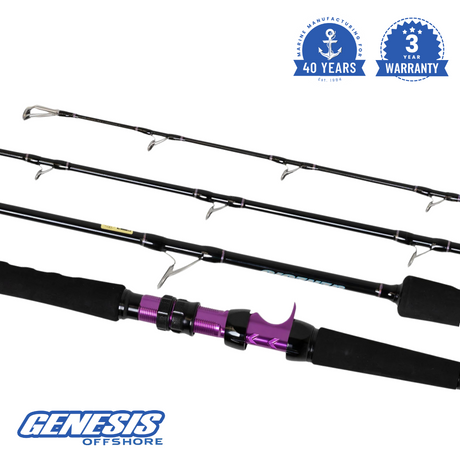
GENESIS 25kg Class I Straight Guide - Carbon Kevlar Jigging Rod
$325.00Unit price /Unavailable -


Surf beaches look uniform from the dune, but the fish are reading a very different picture. Sandbars form and shift with every tide and swell, and the deeper channels and holes between them, known as gutters, are where baitfish get pushed along by the current and where predators wait. Understanding that is what separates a session of casting into empty water from a genuine feed of tailor, Australian salmon, whiting, bream, dart or mulloway. This collection is built around what works from the sand: metal slugs and micro jigs for casting at schools, soft plastics and hardbodies for working gutters, hooks for bait fishing, and spinning reels that can handle the conditions.
Read More
Reading the Beach
A gutter that runs close to the beach, with a defined edge, a colour change in the water and a little turbulence where it meets a bar, is worth more than any amount of blind casting along a flat, featureless stretch of sand. Take a few minutes before casting to walk the beach and look for the darker channel, the rip or the churn where a gutter drains through a bar, and any bird or baitfish activity. Low tide is a good time to scout, because the shape of the bars and gutters is easier to see, and many anglers then return on the making tide to fish them. Conditions change with every swell, so a spot that fished well last month may look completely different today.
Lures for Tailor and Salmon
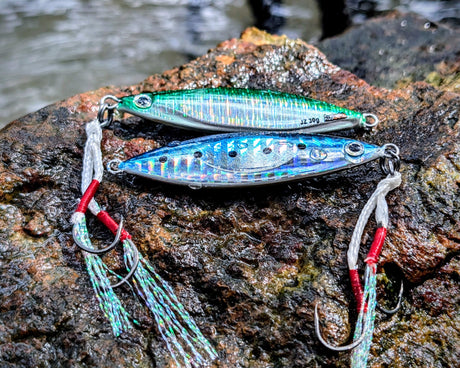
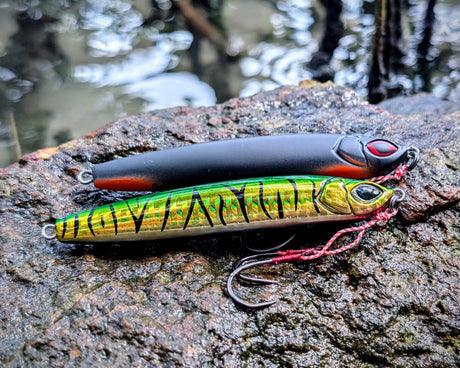
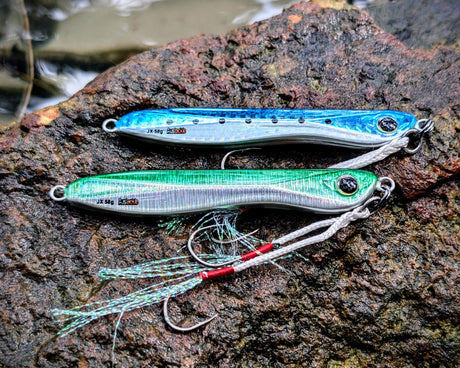
Tailor and Australian salmon hunt schools of baitfish by sight and speed, and a lure that can be cast a long way and worked quickly through a gutter covers water fast and triggers the chase. Our jigs and casting slugs, including the Afishlure Slim Twisty slug at 70mm and 21g, the Mad Dog slugs in 14g, 18g and 25g, the Diamond Slug at 45mm and 10g and the Shinken Micro Jigs at 7g and 9g, are made for this style of fishing. Cast to the back of the gutter, let the lure sink briefly, then retrieve it quickly with sharp twitches to mimic a baitfish trying to escape. If you are targeting tailor or Australian salmon, use a leader with some bite protection, because tailor have sharp teeth and both species run hard enough to test light gear.
Working Deeper Holes
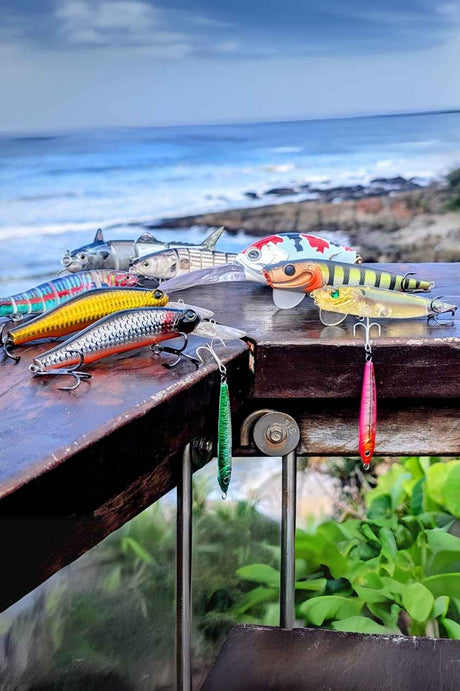
Hardbodies, soft plastics and heavier jigs are worth carrying for the deeper holes and the slower stretches. Our Austackle salt water lures include Tuffies soft plastics from 65 to 100mm, which can be worked along the bottom of a gutter with a slow lift and drop, and Reaper crankbaits in 110 and 130 sizes, which give you another option when fish are less willing to chase. For mulloway, which tend to hold in deeper water and are often fished after dark, the Austackle Shrimp Jigs in 16g, 33g and 74g are worth a look, and our mulloway lures range has more options. Working a jig with some lift and flutter through a deep hole suits fish that are more likely to eat something that looks like it is struggling than something moving frantically.
Hooks and Sinkers for Bait Fishing
If you are fishing bait for whiting, bream and dart, hook choice makes a real difference. These are smaller-mouthed, more cautious feeders that work the edges of gutters and the shallow wash on a rising tide, so a smaller hook on a light running rig lets them pick up a bait naturally. Our fishing hooks range includes baitholder hooks, octopus beak circle hooks, O’Shaughnessy hooks and longshank hooks, sold in multi-size packs of ten. Bream hold around structure and weed and can dive for cover, so a slightly stronger hook helps, while larger fish such as mulloway call for a stronger pattern again. Circle hooks are a good choice for anglers who want to release fish, since they usually hook in the corner of the mouth. Weight matters as much as the hook. Our sinkers include star sinkers, which are designed to dig into sand and hold a bait in the surf, as well as ball and bean sinkers for lighter running rigs.
Reels and Tackle
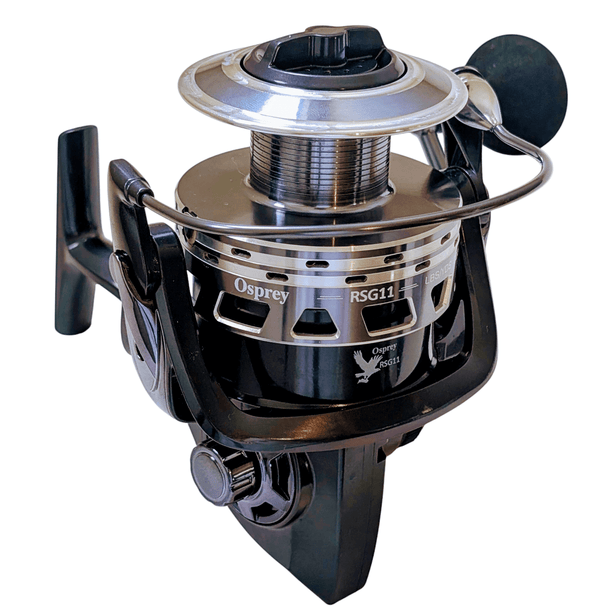
Salt and sand are hard on gear, so rinse your reel with fresh water after every beach session and let it dry before putting it away. Our fishing reels include Ryobi spinning reels from 1000 to 4000 size for lighter lure and bait work, the Genesis Osprey 8000 two-speed spinning reel for heavier surf work, and a Ryobi high speed saltwater metal spinning reel with a CNC aluminium spool and a maximum drag of 10kg. A longer rod helps you cast farther and keep line clear of the wash. Our fishing rods currently cover offshore, jigging and light spin and baitcast rods rather than dedicated surf rods, so check the length and casting weight of any rod against the lures and sinkers you plan to throw. Rod socks, such as the Afishlure Rod Sox, protect a rod between trips, and a lip grip makes it easier to handle toothy fish safely. You will find both in our accessories collection.
Timing, Seasons and Safety
Dawn and dusk are often the best windows for tailor and salmon, when low light lets fish move confidently into shallow gutters, and a rising tide pushing water and baitfish onto a bar can switch a quiet gutter on within minutes. Mulloway are often fished at night, particularly around a tide change. Seasons vary by coast and by year, but tailor and salmon runs generally build through the cooler months along much of the southern and eastern coast, while whiting and bream often fish well through the warmer months, so local reports are worth checking. Beaches are dynamic and sometimes dangerous. Never turn your back on the surf, avoid fishing alone in heavy swell, and wear a life jacket if you are on rocks or in exposed conditions.
Where to Fish
Some of the best known beaches in the country show how all this fits together. The ocean beach on K’gari (Fraser Island) is famous for tailor and Australian salmon, and the beaches around the Coorong in South Australia are known for mulloway, particularly after dark. Stockton Bight in New South Wales offers long stretches of gutters and holes. Access, vehicle permits and fishing rules vary between beaches and states, so check the local requirements before you go, along with size and bag limits for the species you are targeting.
The Most Common Mistake
The mistake we see most often is anglers walking past a genuine gutter to fish the flat, safe-looking sand further along, simply because the water there looks calmer and easier to wade. Fish are not holding in the calm water because there is little for them to eat there. Take five minutes to read the beach, look for the darker channel, the rip or turbulence where a gutter meets a bar and any bait activity, and put your first cast there. Getting that read right usually matters more than lure choice, hook size or anything else on this page.
Frequently Asked Questions
Metal slugs and micro jigs are the go-to for tailor and Australian salmon, since they cast a long way and can be worked quickly through a gutter. Soft plastics and hardbodies are good alternatives for deeper holes.
Dawn and dusk are generally the most productive times, and a rising tide can bring a quiet gutter to life. Mulloway are often fished at night.
Tailor, Australian salmon, whiting, bream, dart and mulloway are all popular targets, depending on where you are and the season.
Look for a darker channel of deeper water running between sandbars, often with a bit of turbulence where it meets a bar. Low tide is a good time to scout, because the shape of the beach is easier to see.
Smaller baitholder or octopus beak style hooks suit whiting, bream and dart, while larger fish such as mulloway call for a stronger pattern. Circle hooks are a good choice if you plan to release fish.
It depends on the species and your rod. Reels in the 3000 to 4000 range suit lighter lure and bait fishing, while larger reels such as an 8000 suit heavier surf work and bigger fish.
Rinse your reel and rod with fresh water after every session, let them dry before storing and protect your rod with a sock between trips.
It can be, but beaches are dynamic. Watch the surf, never turn your back on the waves, avoid fishing alone in heavy swell and wear a life jacket on rocks or exposed spots.

Someone bought fishing reels
2 min ago