


 Sold out


 Sold out

 Sold out
Fishing Superstore
2.3M Inflatable Boat Laminated Wear Resistant Fishing Boat
$838.99Unit price /Unavailable Sold out
Fishing Superstore
3.0M Inflatable Boat Laminated Wear Resistant Fishing Boat
$868.99Unit price /Unavailable Sold out
Fishing Superstore
Inflatable 4 Person/Seat Towable Boat Flying Fish Blower
$2,268.99Unit price /Unavailable Sold out
Fishing Superstore
$1,540.99Unit price /Unavailable
Fishing Superstore
$1,400.99Unit price /Unavailable Sold out
Fishing Superstore
$1,540.99Unit price /Unavailable Sold out
Fishing Superstore
$1,400.99Unit price /Unavailable Sold out
Fishing Superstore
$1,188.99Unit price /Unavailable Sold out
Fishing Superstore
$1,540.99Unit price /Unavailable Sold out
Fishing Superstore
$1,400.99Unit price /Unavailable Sold out
Fishing Superstore
$1,188.99Unit price /Unavailable Sold out
 Sold out
Fishing Superstore
Intex Sports Challenger K1 Inflatable Kayak 1 Seat Floating Boat
$254.95Unit price /Unavailable Sold out




Top picks for you
-


 Up to $42.49 off
Tidal Trekker
Tidal Trekker 35L Insulated Cooler Backpack
20% OFF$169.95$212.44Savings $42.49Unit price /Unavailable -

-
 $87.55 off
-

-
 $42.05 off
Fishing Superstore
32% OFF$89.95$132.00Savings $42.05Unit price /Unavailable -

GENESIS
GENESIS Stainless Steel Propeller - Suzuki/Mercury/Tohatsu 35/60hp Outboard Motor P13
$504.00Unit price /Unavailable -
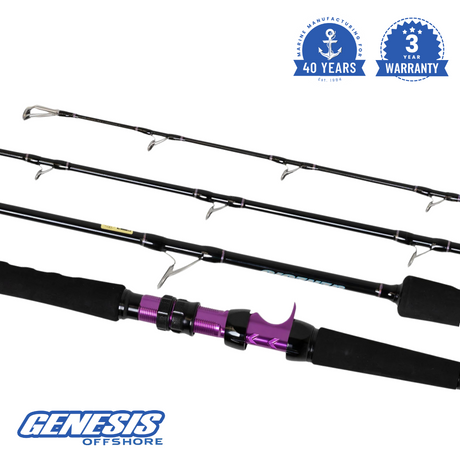
GENESIS
GENESIS 25kg Class I Straight Guide - Carbon Kevlar Jigging Rod
$325.00Unit price /Unavailable -


A portable inflatable is the easiest way onto the water in Australia without a trailer, a mooring, or a long wait at the ramp. Drop it in the boot deflated, drive to a dam, a calm river reach or a sheltered bay, pump it up and you can be fishing or pottering around in a matter of minutes. That convenience is the whole appeal, and it is also where buyers get themselves into trouble, because the boat that packs down smallest is not automatically the right size for the people and gear you actually plan to load into it. This collection covers the Intex range, from entry-level recreation boats through to rigid-floor fishing models, alongside our own heavier-duty 3-layer PVC boats, and the right choice depends far more on how you’ll use it than on how it looks in the box.
Read More
Sizing: Length and Rated Capacity
Two numbers matter when sizing an inflatable: length and rated capacity, and they do not always scale the way you would expect. At the compact end, the Intex Challenger 2 is 232cm long with a 200kg capacity, and the Seahawk 2 is 236cm with a 240kg capacity, which in practice means two adults and not much else. Step up to the Intex Challenger 3 at around 295cm and roughly 300kg, then to the Seahawk 4 (351cm, 480kg), the Mariner 4 (3.28m, 500kg) and the Excursion 4 (around 315cm, close to 500kg), and you are into territory where a few adults and a genuine load of gear start to make sense. At the top end, our own 3.0m and 3.6m PVC boats list capacities of 550kg and 750kg.
Read the kilogram figure rather than the person count. The Intex Explorer 300 is sold as a 3-person boat, for example, but it is rated at 186kg, which suits two adults or an adult with kids, and that rating is a hard ceiling, not a suggestion. An overloaded inflatable loses freeboard fast, and a boat sitting low in the water ships water over the tubes far sooner than a bigger, heavier hull would.
Floors, Chambers and Construction
Floor type changes how a boat fishes. The Intex Explorer boats use a soft inflatable floor and are built for relaxed recreation on calm water rather than serious fishing. The Seahawk and Challenger boats step up with multiple air chambers (the Seahawk adds an inner auxiliary chamber inside the main hull) and PVC construction, while the Mariner range adds a rigid floor and, on the Mariner 4, a firm platform that Intex describes as stable enough to stand and cast from on calm stretches of river.
Our own 3.0m and 3.6m boats take a different approach: a 3-layer 1.2mm PVC hull with three independent air chambers plus a fourth for the high-pressure air deck, which inflates to a hard, board-like floor and acts as extra buoyancy. You will see Hypalon (also sold as CSM) mentioned on premium boats for its UV and abrasion resistance, but every boat in this collection is PVC or vinyl, so what separates one from another is the thickness and layering of the fabric, the number of chambers, and the floor. Whichever you choose, rinse off salt and sand after each outing and store the boat out of direct sun, because UV is the single biggest thing that shortens an inflatable’s life in Australia.
Motors and Power
Transom power varies a lot across this range, so check the listing before you buy a motor, not after. The Seahawk and Mariner boats have motor-mount fittings, and the Mariner 4 lists an optional motor mount kit rated for up to a 3hp motor. Our heavier 3-layer PVC boats are rated for much more power, 6 to 12hp on the 3.0m and 9.8 to 15hp on the 3.6m. Plenty of owners run these boats on oars alone, or pair a lighter hull with an electric motor for quiet trolling on a dam where a petrol motor is either unnecessary or restricted.
Where an Inflatable Earns Its Keep
These boats earn their keep on sheltered water: farm dams, lakes, calm river reaches, protected bays, and as a tender rowed or motored ashore from a bigger boat. A light inflatable is not the right tool for surf launches, bar crossings or open water with real fetch, and the sturdier hulls only widen the margin, they do not remove it. Most models pack into a carry bag light enough for one person, though the larger boats are noticeably heavier. If you want an even lighter option for solo estuary fishing, it is worth comparing a portable inflatable against a kayak or SUP.
The Most Common Mistake
The mistake we see most often is buying on price and packed size alone, then turning up with three adults, an esky and a tackle bag for a boat rated for two. It is an easy trap, because the smallest, cheapest hull in a range always looks like enough boat until it is sitting a hand’s width from swamping with everyone aboard. A close second is choosing a recreation-grade boat for fishing work, when a rigid floor or hard air deck, a higher capacity and a proper motor rating make a real difference. Buy for the trip you will actually do most often, with a sensible margin in the capacity rating, rather than the trip you might do once a year.
Whichever hull you end up with, pack the right oars, pump and anchoring gear from our boat accessories range, keep it clean with our boat cleaning and protection products, and browse the wider boating range so you are not caught out once you are on the water.
Frequently Asked Questions
Go by the kilogram capacity on the listing rather than the person count. Our compact boats are rated at around 200 to 240kg, which means two adults, while the larger Intex boats and our 3.0m and 3.6m PVC boats are rated from roughly 480kg up to 750kg.
It depends on the boat. The Mariner 4 lists an optional motor mount kit for up to a 3hp motor, while our 3-layer PVC boats list much higher ranges, 6 to 12hp on the 3.0m and 9.8 to 15hp on the 3.6m. Always check the listed rating for the specific boat before you buy a motor.
Hypalon (CSM) is a premium synthetic rubber fabric known for UV and abrasion resistance, and it costs more. Every boat in this collection is PVC or vinyl, so the differences come down to fabric thickness and layering, the number of air chambers and the type of floor.
A rigid floor or hard air deck gives a much more stable platform than a soft inflatable floor. The Intex Mariner range uses a rigid floor, and our 3.0m and 3.6m boats use a high-pressure air deck that feels like a hard board once inflated.
They are best kept to sheltered water such as calm bays, estuaries, lakes, dams and slow rivers. Surf, bars and open water with real chop are beyond what a light, low-sided inflatable is designed for.
Rinse off salt and sand after every outing, let it dry before packing it away, and keep it out of direct sun when it is not in use, since UV is the biggest cause of fabric breakdown over time.
Requirements vary by state and often depend on whether you fit a motor and how powerful it is, so check with your state’s marine authority before you head out.

Someone bought fishing reels
2 min ago