


VTAVTA
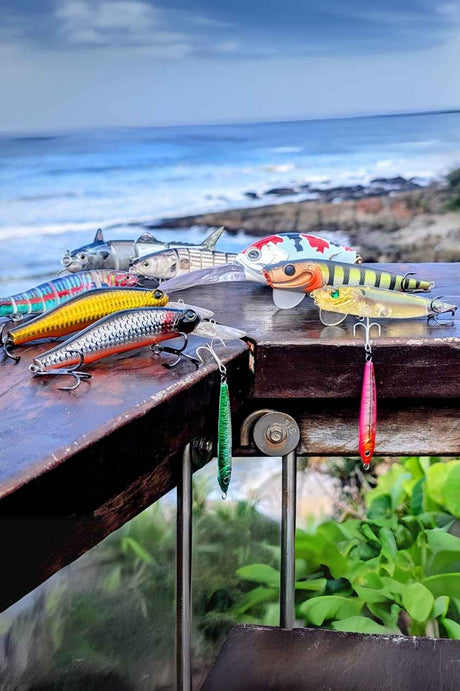
VTAVTA Multi Jointed Swimbait - Segmented 7pc Lure 100mm 17.5g
$9.95Unit price /Unavailable


-




Top picks for you
-


 Up to $42.49 off
Tidal Trekker
Tidal Trekker 35L Insulated Cooler Backpack
20% OFF$169.95$212.44Savings $42.49Unit price /Unavailable -

-
 $87.55 off
-

-
 $42.05 off
Fishing Superstore
32% OFF$89.95$132.00Savings $42.05Unit price /Unavailable -

GENESIS
GENESIS Stainless Steel Propeller - Suzuki/Mercury/Tohatsu 35/60hp Outboard Motor P13
$504.00Unit price /Unavailable -
GENESIS
GENESIS 25kg Class I Straight Guide - Carbon Kevlar Jigging Rod
$325.00Unit price /Unavailable -


Mangrove jack are one of the hardest fighting fish you can catch in an Australian estuary. They hit hard, they head straight for the snags and they will test your drag, your knots and your nerve. This collection brings together the lures we stock for jacks: crankbaits, surface lures, prawn and shrimp imitations, swimbaits, jerkbaits and soft plastics. This page explains what is known about the fish, how to fish snag country with lures and how to set up tackle that can stop them.
Read More
Know the Fish
NSW DPIRD says mangrove jack are found in coastal waters and rivers from Shark Bay in Western Australia, through the Torres Strait and Queensland, south to Lake Illawarra in New South Wales, and occasionally in more southern NSW estuaries. The maximum size is about 1.2m and 16kg. They are bright reddish-brown to dark olive-brown, with pinkish fins, a generally darker tail and a dark spot on each scale that makes a criss-cross pattern. Juveniles have a blue line below the eye, which is often visible on adults too. DPIRD calls them an extremely strong fighter that regularly shelters among submerged snags, and it notes that they are often confused with red bass, which has a deep pit in front of each eye that mangrove jack lack.
Fishing Snags
Because jacks live in snags, the way you fish matters as much as the lure you choose. Cast close to the cover, as tight to the timber, rock wall or pylon as you can, and start winding straight away. A jack that hits the lure will try to return to its hiding place, so you need to turn it quickly and keep it out. A lure that lands short and sits is less likely to draw a strike than one that lands tight and moves at once. Fish you hook will not wait for you to be ready, so set the drag before you cast. Use a sturdy rod that can apply pressure straight away.
Crankbaits
Diving crankbaits are the classic jack lure, because they can be cast into tight cover and wound back along the edge. The collection includes the Reaper 110, the Berko, the Wally at 103mm and 15.5 grams, the Gypsy Jackal at 90mm and 8 grams, the Bruiser and the Fat Wessel Minnow at 120mm and 40 grams. Choose a lure that dives to just above the cover, and wind it so it bumps the edge of the timber. When the lure hits a snag, stop winding and let it float up. Our crankbait lures page covers the range.
Surface Lures
Jacks will hit a lure on top, and a surface strike is a good reason to fish them. The Austackle Spritz and Big Spritz have two tow points, with a popper action from the lower point and a walk the dog action from the top, according to the maker. The Droptail is 80mm and 11 grams, the Skippy is an 85mm walker at 10 grams, and the Bullet Whopper Popper is 80mm and 14 grams. The Squire Soft Prop Frog is 90mm and 13 grams. Work a surface lure along the edge of cover with pauses, and be ready for a hit. Our top water lures page has more detail on working them.
Prawn and Shrimp Imitations
A prawn or shrimp imitation is a natural choice around mangrove edges and rock bars. The Flick Shrimp is 100mm and 12 grams, the Crank Shrimp is 95mm and 13.6 grams, the Power Prawn Baby is 75mm and 8.8 grams and the Juvenile Splash Prawn is 100mm. Fish them with a slow lift and drop, or a slow wind along the bottom, near the cover. Cast them tight to the edge and let them sink before you start the retrieve.
Swimbaits, Jerkbaits and Soft Plastics
The Jointed Demon Swimbait is 130mm and 20 grams, and the VTAVTA Multi Jointed Swimbait and the Runner 3D-Eye Jerkbait at 130mm cover the larger profiles. Austackle Tuffies in paddleworm, Fishy Thing, whiptail and ringtail styles, and a minnow paddle tail range, suit lighter tackle and quieter fish. A soft plastic can be cast tight to cover and let sink, and it is a good choice when jacks are less aggressive. Our soft plastic lures collection has more.
Tackle and Leader
Jacks fight hard and run for cover, so the tackle needs to be strong enough to stop them. Use a stout rod, a reel with a smooth, strong drag and braid, and a heavy fluorocarbon or mono leader to resist abrasion on timber and oysters. Tie a knot you trust, and check the leader after every fish. Our fluorocarbon leaders collection has several breaking strains to choose from. Replace blunt or rusted treble hooks on your lures, because a poorly hooked fish has a better chance of reaching the snags.
Other Species in the Same Water
Jacks share their water with other species that take the same lures, and our barra lures page covers another species that fishers target around snags. Bream, flathead and trevally may also take lures worked near structure, which can help you find where fish are active.
The Most Common Mistake
The mistake we see most often is under-gunning. A jack that hits near a snag has a head start, and light tackle gives you no way to turn it. Use a strong leader and a firm drag, and stand ready to lean on the fish as soon as it hooks up. The second common mistake is casting too far from the cover. A lure that is not tight to the structure gives the fish less reason to commit.
Frequently Asked Questions
NSW DPIRD says they are found in coastal waters and rivers from Shark Bay in Western Australia, through the Torres Strait and Queensland, south to Lake Illawarra in NSW, and occasionally in more southern NSW estuaries.
DPIRD gives a maximum of about 1.2m and 16kg.
DPIRD says they are bright reddish-brown to dark olive-brown, with pinkish fins and a dark spot on each scale. Juveniles have a blue line below the eye.
Diving crankbaits, surface lures, prawn imitations and soft plastics all work. Choose a lure you can cast tight to cover.
A sturdy rod, a smooth and strong drag, braid and a heavy leader. Jacks fight hard and head for cover, so light tackle gives you little control.
DPIRD says they regularly shelter among submerged snags, so fish timber and other cover first.
DPIRD says red bass have a deep pit in front of each eye, which mangrove jack lack.
Size and bag limits differ between states and can change, so check the current rules with your state fisheries department.

Someone bought fishing reels
2 min ago