Finesse
Finesse Slow Pitch Flutter Jig, 60gm, Hot Pink Stripe, 2 pack
$30.95Unit price /Unavailable


Finesse
Finesse Slow Pitch Flutter Jig, 100gm, Hot Pink Stripe, 2 pack
$38.95Unit price /Unavailable

Finesse
Finesse Slow Pitch Flutter Jig, 100gm, Bright Orange, 2 pack
$38.95Unit price /Unavailable


Fishing Superstore
Dekoi 14gm Bladed Swim Jig, Chatterbait, Camo Green, 2 pack
$31.95Unit price /Unavailable

Finesse
Finesse Rumoika Squid Jig, Purple Pink Neon, size 3.5, 2 pack
$41.95Unit price /Unavailable


Top picks for you
-


 Up to $42.49 off
Tidal Trekker
Tidal Trekker 35L Insulated Cooler Backpack
20% OFF$169.95$212.44Savings $42.49Unit price /Unavailable -

-
 $87.55 off
-

-
 $42.05 off
Fishing Superstore
32% OFF$89.95$132.00Savings $42.05Unit price /Unavailable -

GENESIS
GENESIS Stainless Steel Propeller - Suzuki/Mercury/Tohatsu 35/60hp Outboard Motor P13
$504.00Unit price /Unavailable -
GENESIS
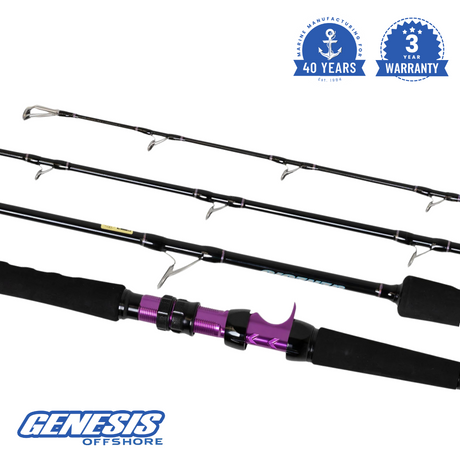
GENESIS 25kg Class I Straight Guide - Carbon Kevlar Jigging Rod
$325.00Unit price /Unavailable -


This collection is the starting point for anyone building a lure selection rather than shopping for one species, and the honest answer to "which lure should I buy" is that it depends on what you're targeting, what the water looks like, and what depth you're working. The families below cover most of what Australian lure fishing runs on, from a farm dam to a harbour to open water offshore.
Read More
Soft Plastics
Soft plastics are the most versatile starting point for a first tackle box. A 2.5-4 inch paddle-tail or grub rigged on a 1/16oz to 1/2oz jig head covers water from skinny estuary flats through to 4-6 metre river holes, just by changing head weight to match depth and current. A slow hop-and-pause retrieve along the bottom out-produces a fast wind in most estuary systems, including well-known ones like Sydney Harbour and Moreton Bay, and plastics fish year-round but come into their own through the warmer months from around October to April as bait activity picks up. Our soft plastic range covers the weights and profiles this style of fishing needs.
Hardbody Divers & Crankbaits
Hardbody divers do the work for you: cast one out, wind at a steady pace, and the bib creates the wobble without any input from the angler, which makes this a genuinely good starting category. Shallow divers running under 1 metre suit skinny flats and impoundment margins, while deep-diving models get down 3-4 metres for river holes and drop-offs, the kind of water found in impoundments like Lake Mulwala and Wivenhoe Dam. Retrieve speed should stay slow and steady rather than fast, since most hardbodies are designed to reach their working depth on a moderate wind rather than a sprint. Spring through autumn, as water temperatures sit in the high teens to low twenties, is when hardbody fishing is most consistent in most southern impoundments. Our crankbait range covers both ends of that depth spread.
Vibes & Blades
Vibes and blade lures are one of the most useful search tools in the tackle box because they don't rely on structure to work. A 40-80mm vibe worked with a lift-and-drop retrieve, lifting the rod tip 30-50cm then letting the lure fall on a semi-taut line, covers open water, drop-offs and sand flats fast, and it's a genuinely popular approach in bays like Port Phillip Bay where fish sit over large areas of open, structureless bottom. Lighter 3-5g vibes suit skinny water and slower current, while 7-14g models hold bottom in deeper water or a harder run of tide. Our vibe lure range covers that full weight spread.
Spinnerbaits
Spinnerbaits earn their keep in dirty or turbid water and around heavy timber, where the thump of the blades lets a fish find the lure by vibration rather than sight. Most freshwater spinnerbaits sit in the 1/4oz to 1/2oz range, cast tight to standing timber and slow-rolled back with occasional pauses, and they're a mainstay in tannin-stained and turbid impoundments like Lake Eildon and Copeton Dam through spring and summer when resident natives are feeding hardest. Our spinnerbait range covers the weights this style of fishing calls for.
Surface Lures & Stickbaits
Poppers, worked with a sharp pull that makes them chug and spit water, and walk-the-dog stickbaits, worked with a steady twitch-and-slack cadence, produce some of the most visually explosive strikes available in Australian lure fishing. Both fish best at dawn and dusk, or over structure where fish are actively feeding on top, and they come into their own through the warmer months, roughly November to April in most systems, including well-known surface fisheries like the Hawkesbury River and Noosa River.
Jerkbaits & Swimbaits
Jerkbaits are suspending or slow-sinking hardbodies worked with a sharp jerk-jerk-pause retrieve, and the pause is where most strikes come: a jerkbait that hangs motionless in the strike zone for a full second or two before the next twitch out-fishes one worked continuously. They suit clearer water where a fish gets a proper look at a stationary lure. Swimbaits, by contrast, are built to swim on a straight, steady retrieve with a realistic paddle-tail or jointed kick, and a slow, methodical wind through 1-3 metres of water covers structure edges without the stop-start rhythm a jerkbait needs. Both are worth having alongside soft plastics rather than instead of them, since they cover water differently. Our jerkbait and swimbait ranges are stocked for exactly this gap in a tackle box.
Metal Jigs
Metal jigs are built for a different style of fishing entirely: vertical jigging over reef, structure or bait schools, mostly from a boat. A fast, erratic lift-and-drop through the water column suits reaction-strike species holding over structure, while a slower, fluttering style worked on a more relaxed rhythm imitates an injured baitfish sinking through the strike zone. Jig weight, typically 20g to 150g or heavier depending on depth and current, needs to get down to the fish in a reasonable time without overshooting into snags below. Our jigs range covers the weights and styles this style of fishing calls for.
Building a Tackle Box: Lure Value Packs
For anyone starting out or restocking after a season of losses to snags, our lure value packs are the most practical way to build a spread of proven lures across several of the families above in one purchase, rather than buying each style individually at full price. They're consistently one of the best-selling picks in this collection, and a sensible starting point before working out which specific families suit the water you fish most.
The Most Common Mistake
The mistake most anglers make browsing a general lure range like this is buying based on how a lure looks in the packet rather than what species, depth, water clarity and current it's actually built for. A beautifully painted deep-diving hardbody does nothing on a shin-deep, gin-clear sand flat, and a bright fluoro soft plastic gets ignored in water clear enough that a natural pattern would work far better. The better approach is to work backwards from those four things (species, depth, water clarity and current) and let them decide the lure family and colour, rather than picking on looks and hoping the water cooperates.
Shop by Species
If you already know your target species, our dedicated pages go deeper than a general range can: Flathead Lures for estuary ambush fishing, Bream Lures for light-tackle structure work, Barra Lures for northern impoundments and rivers, and Snapper Lures for bottom-dwelling reef and structure species, each with the specific rigs, leader and retrieve detail this general page can't cover for every species at once.
Frequently Asked Questions
There isn't one lure that covers every situation, but a soft plastic on a jig head is the most adaptable starting point, since changing head weight lets the same basic lure fish anywhere from a skinny flat to a deeper hole just by adjusting depth.
Match the head to depth and current rather than the size of the fish: 1/16oz to 1/8oz for shallow, slow water, stepping up to 1/4oz or heavier once you're fishing deeper water or a harder-running tide where a lighter head gets swept off the bottom.
Brighter, higher-contrast colours (chartreuse, orange, fluoro pink) stand out better in turbid or tannin-stained water, while natural, translucent patterns suit clear water where fish get a longer look before committing.
Only for genuinely toothy species like tailor or mackerel. For most estuary and impoundment fishing, standard fluorocarbon leader in a breaking strain matched to the structure you're fishing is all that's needed.
A soft plastic needs the angler to create the action through the retrieve, which makes it more versatile but takes a bit more practice to fish well. A hardbody's bib creates the wobble on a steady wind, which makes it a more forgiving option while you're still developing a feel for retrieve speed.
Many hardbodies, vibes and soft plastics cross over fine, but always rinse gear thoroughly in fresh water after a saltwater session, since saltwater is harder on hooks and hardware than freshwater use.
Match jig head style to the structure: a weedless or bait-holder style head lets you fish timber, weed and rock with far fewer hang-ups than a standard round head, at some cost to hook-up rate.
Value packs bundle a spread of proven lures, typically across a few of the families above, at a lower combined price than buying each individually. They're a genuinely practical way to build out a first tackle box or restock after a season of losses.
Dawn and dusk consistently produce more strikes than the middle of a bright day for most species, since fish generally feed more confidently in low light.
Both can fish well, but the last few hours of the run-out through to the first hour of the run-in is usually the most productive window in most estuary systems, since this is when bait gets concentrated into predictable lanes.