


 Pre-order
 Pre-order
 Pre-order
 Pre-order


Top picks for you
-


 Up to $42.49 off
Tidal Trekker
Tidal Trekker 35L Insulated Cooler Backpack
20% OFF$169.95$212.44Savings $42.49Unit price /Unavailable -

-
 $87.55 off
-

-
 $42.05 off
Fishing Superstore
32% OFF$89.95$132.00Savings $42.05Unit price /Unavailable -

GENESIS
GENESIS Stainless Steel Propeller - Suzuki/Mercury/Tohatsu 35/60hp Outboard Motor P13
$504.00Unit price /Unavailable -
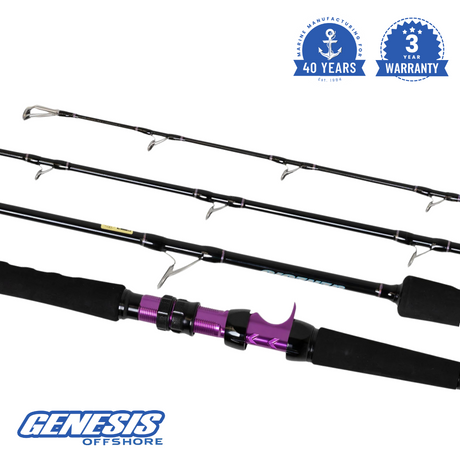
GENESIS
GENESIS 25kg Class I Straight Guide - Carbon Kevlar Jigging Rod
$325.00Unit price /Unavailable -


Murray cod are ambush predators built for a life around timber, and that single fact should shape almost every decision you make when you’re chasing them. They sit tight against snags, undercut banks, rock bars and bridge pylons, using the structure to break current and hide from prey rather than roaming open water looking for a feed. A cod’s strike is less about chasing something down and more about a short, violent lunge from cover, which is why presenting a lure right on the edge of a snag, not two metres out from it, is what separates a session of follow-ups from one with hook-ups.
Read More
Lures That Push Water
Cod have a genuinely broad diet, from small fish and yabbies to frogs and mice, so a lure doesn’t need to match anything precisely, but it does need to push water. In the murky water that describes much of the Murray-Darling system for a good part of the year, fish find a lure by vibration as much as by sight, and displacement matters more than realism. That’s why our Murray cod range leans on a few proven styles rather than one hero lure. Deep-diving, big-billed crankbaits like the Austackle Wobbler are easy to work around snags and right into the face of a fish. Jointed, segmented swimbaits, from around 100mm up to the 180mm Afishlure Poddy Mullet, give a large, fish-like profile and plenty of movement. Afishlure’s Lively Crayfish and prawn-style lures imitate food cod eat all year, and they’re worth having for the days a fish ignores a baitfish profile. Our range is built around these styles rather than heavy spinnerbaits, and surface lures such as poppers, frogs and mouse patterns come into their own on warm, still evenings when fish push up onto shallow flats to feed.
Working a Surface Lure
Surface fishing is where cod fishing gets properly addictive, and also where patience pays off most. The Austackle Spritz and Big Spritz have two tow points, giving a popping action from the lower point and a walk-the-dog action from the upper one, so one lure covers two styles. Whichever you choose, a slow walk, a long pause right beside a log, and the discipline to leave it sitting will often draw the take. Our range also covers frogs and mouse-style lures like the Afishlure Hunt Mouse for dusk and after dark.
Tackle for a Short, Brutal Fight
Tackle for cod needs to be built for the fight you’ll actually have, which is a short, brutal one at close range with timber on every side. Baitcast outfits paired with heavy braid and a strong monofilament or fluorocarbon leader are the usual choice, because anything lighter simply won’t turn a big fish’s head before it reaches the snag it launched from. Our Krypto 8 Ultrabraid tops out at 50lb, and our Krypto Shock Leader comes in 50, 60 and 80lb, which covers the leader end of a cod setup. This is heavier gear than most Australian freshwater fishing calls for, and it’s worth setting up a dedicated cod outfit rather than trying to stretch a bass rod to do a job it was never built for.
Seasons and Closures
Cod fishing follows water temperature closely, and it follows the rules even more closely. In New South Wales, Murray cod can’t be taken from 1 September to 30 November, covering the spring spawning period, with Copeton and Blowering dams exempt. Victoria uses the same dates, but its exemptions are much broader: the closure does not apply to waters south of the Great Dividing Range (except the Yarra River), the Wimmera and Millicent basins (except the Wimmera River), or a list of named waters that includes Lake Eildon, Lake Eppalock and Cairn Curran Reservoir. Queensland has its own closure in the Murray-Darling drainage, from 1 August to 31 October, with Beardmore, Connolly, Cooby, Coolmunda, Glenlyon, Leslie and Storm King dams exempt. South Australia has its own rules as well, so always check your state’s current rules and the specific water before you plan a trip.
Outside the closure, summer and into early autumn are the most reliable, once fish have recovered condition and the water has warmed. Low light at dawn and dusk, and overcast or humid days, generally outfish the middle of a bright, still afternoon, while cold winter water slows fish right down and rewards slower, smaller presentations.
Where to Fish
Classic Murray-Darling cod water includes Lake Mulwala on the NSW-Victorian border, Copeton Dam and the Gwydir system, the Menindee Lakes on the lower Darling, and the Murrumbidgee River through the Riverina, along with countless smaller creeks and billabongs that hold fish few anglers ever target. These same systems often hold carp in genuinely frustrating numbers, and a cod angler working timber will regularly find carp finning over the shallows on the same drift.
The Most Common Mistake
The mistake we see most often, both from visiting anglers and locals who should know better, is fishing too fast and too far from cover. Cod don’t move far to eat, so a lure worked briskly past the edge of a snag gets one look and a refusal, while the same lure worked slowly right against the timber, with pauses right in the strike zone, gets eaten. The second most common error is going too light on leader out of habit from other lure fishing, then losing a good fish in the snag it just came out of. Treat every cast as though the next bite could be the biggest fish you’ve hooked this year, because down the Murray-Darling system, on any given cast, it genuinely could be.
Frequently Asked Questions
There’s no single answer, but lures that push plenty of water do best: deep-diving crankbaits that can be bumped off timber, large jointed swimbaits, crayfish imitations, and surface lures on warm evenings. Match the lure to the light and conditions rather than hunting for one magic pattern.
Yes. Larger paddle-tail soft plastics on a heavy jighead can work well, particularly when fish are tight to timber and won’t chase a faster-moving lure. Stay with heavier leader than you would for bream or bass, since the fish and the structure are both unforgiving.
Slowly, and close to cover. Work crankbaits and swimbaits right against the edge of a snag with pauses in the strike zone, and on the surface, walk or pop the lure a short distance, then let it sit. Most refusals come from fishing too fast or too far from the timber.
Cod feed most actively as water warms, so summer and early autumn are generally the most reliable. In cold winter water they slow down and tend to respond better to slower, more deliberate presentations.
Summer and into early autumn are the most reliable once the water has warmed, with dawn, dusk and overcast days outfishing the middle of a bright afternoon. Remember that closed seasons apply in most states, from 1 September to 30 November in NSW and Victoria and from 1 August to 31 October in Queensland, with exemptions for some waters, so plan around them.
In NSW and Victoria, 1 September to 30 November, and in Queensland’s Murray-Darling drainage, 1 August to 31 October. Exemptions differ by state: in NSW, Copeton and Blowering dams; in Victoria, a much broader list that includes waters south of the Great Dividing Range (except the Yarra River) and lakes such as Eildon and Eppalock; in Queensland, Beardmore, Connolly, Cooby, Coolmunda, Glenlyon, Leslie and Storm King dams. South Australia has its own rules, so check your state’s current regulations for the specific water you’re fishing.
Firm enough to turn the fish before it reaches the snag it launched from. Cod fishing is short and close range, so a light drag that lets a good fish run is a quick way to lose it in the timber.
Heavy braid on a baitcast outfit with a strong monofilament or fluorocarbon leader. Going too light on leader out of habit from other lure fishing is one of the most common ways anglers lose a good fish.

Someone bought fishing reels
2 min ago