fishing-superstore-au
Harbor Flashy Occy Head Assist I #3.5 UV Pink
From $14.24Unit price /Unavailable


-


Top picks for you
-


 Up to $42.49 off
Tidal Trekker
Tidal Trekker 35L Insulated Cooler Backpack
20% OFF$169.95$212.44Savings $42.49Unit price /Unavailable -

-
 $87.55 off
-

-
 $42.05 off
Fishing Superstore
32% OFF$89.95$132.00Savings $42.05Unit price /Unavailable -

GENESIS
GENESIS Stainless Steel Propeller - Suzuki/Mercury/Tohatsu 35/60hp Outboard Motor P13
$504.00Unit price /Unavailable -
GENESIS
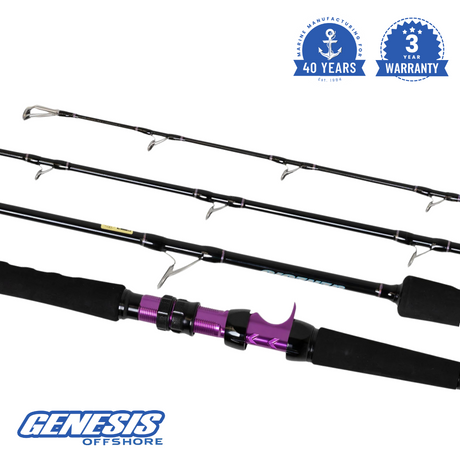
GENESIS 25kg Class I Straight Guide - Carbon Kevlar Jigging Rod
$325.00Unit price /Unavailable -


Jigging works on a simple trigger: a jig falling or fluttering through the water looks like an injured baitfish, and that is an easy meal for a predator. This collection covers the full range, from micro jigs and casting slugs that suit inshore estuary and beach work, through slow pitch and flutter jigs, octopus and kabura-style jigs, to heavy lead and fast-drop jigs that get down in deep water and strong current. The right jig depends on the depth you are fishing, the current and the species you are chasing, and getting that match right matters more than brand, colour or even technique.
Read More
How Jigs Work
Jigs are designed to do one of a few things. Casting slugs and micro jigs are built to be thrown a long way and retrieved quickly, which suits tailor, salmon, bream and other fish that chase bait schools. Vertical and speed jigs are dropped to the bottom and worked up through the water column with rapid lifts, and slow pitch jigs are designed to flutter and fall with a gentle lift-and-pause action, which can tempt fish that ignore a fast retrieve. Octopus and kabura-style jigs add a soft skirt or a rubber body that moves in the water, and are popular for snapper and other reef species. Many hook-ups happen as the jig falls or just after it, so keep the line tight and watch for a change on the drop. For lighter inshore work, a soft plastic rigged on one of our jig heads is another way to cover the same shallow water, although it fishes differently to a metal jig.
Matching Jig Weight to Depth
Matching jig weight to depth is one of the biggest factors in getting bites. As a rough guide, many anglers allow around one to two grams of jig weight per metre of water, then go heavier to cope with current. Our range runs from 7g and 9g Shinken Micro Jigs and the Austackle JZ and JX micro jigs for shallow and inshore work, through slow pitch and flutter jigs such as the Afishlure Tear Drop (20 to 100g), the Flutter Wing (40 to 200g) and the Finesse 60g and 100g slow pitch jigs, to the Blue Wings lead jigs (90 to 210g), the Drunken Sailor (40 to 300g) and the Finesse Fastdrop jigs at 250g. Blanket Octopus Jigs run from 60g to 300g. As a general guide, lighter jigs suit shallow reef and estuary work, while deeper water and strong current call for heavier ones, simply to reach the bottom and stay in contact with it.
Line, Leader and Rods
Line class and rod rating should scale with jig weight. Jigging is usually done with braid, and braid ratings are often given in PE numbers, where a higher number means a thicker, stronger line. As a very general guide, lighter jigs suit lighter PE braid, while heavy jigs fished in strong current call for heavier PE braid, but your rod’s rated line class and jig weight range are the best guide. Our 8-strand braids suit jigging, and a length of heavy fluorocarbon leader joined to the braid with a strong knot, such as an FG or PR knot, takes the abrasion when a fish drags the line across reef. A purpose-built jigging rod makes it much easier to work a jig all day and to lift a fish away from structure.
Rigging and Hooks
The terminal end matters almost as much as the jig itself. Many jig anglers use a solid ring or a heavy split ring at the head of the jig rather than tying straight to the eyelet, because it lets the jig swim more freely and spreads the load. Assist hooks are usually looped on with a short length of heavy assist cord and positioned so they ride just clear of the jig, and a stiff or badly rigged assist can kill the flutter action that makes a jig look alive on the drop. We stock assist hooks, such as the Harbor Flashy Occy Head Assist in UV pink, and our wider fishing hooks range covers other options. Check your hooks regularly, and replace them when they are blunt or rusty.
Species and Where to Fish
Jigs catch a wide range of fish. Kingfish will follow a jig up off structure and often eat it in the last few metres of the retrieve, which is why so many hook-ups happen near the boat. Snapper and other reef species sit tighter to the bottom and often respond better to a jig worked with more pause and less speed, letting it flutter down into their zone. Fish such as mackerel, tailor and bonito chase bait schools through open water, where a faster, more erratic retrieve usually draws more strikes. Reefs, wrecks, bommies, drop-offs and bait schools are all good places to start. Seasons and locations vary a lot by species and coast, so check local reports and fishing rules, including size and bag limits, before you go.
The Most Common Mistake
The mistake we see most often is fishing a jig that is too light for the depth and current. When a jig cannot get down and stay in the strike zone, everything else about the presentation is wasted, no matter how good the rod work is. The other version of the same mistake is pairing a heavy jig with a rod or line that is too light, which robs the jig of its action and leaves you under-gunned the moment something solid heads for structure. Get the weight to depth ratio right first, match the rod and line to the jig, and the hook-up rate tends to look after itself.
Frequently Asked Questions
It depends on depth and current. A common rule of thumb is around one to two grams per metre of water, going heavier in strong current. Our range runs from 7g up to 300g.
Slow pitch jigs are designed to flutter and fall with a gentle lift-and-pause action, while speed or vertical jigs are worked with faster, longer lifts. Both can catch fish, and the right one depends on the species and the mood of the fish.
Kingfish, snapper, mulloway, tailor, salmon, mackerel and many reef species all take jigs, depending on where you are and the season.
Braid is the usual choice, matched to the jig weight and your rod’s rated line class, with a heavy leader joined by a strong knot.
A purpose-built jigging rod makes it easier to work a jig and lift a fish away from structure, and a rod rated for the jig weight you plan to use is the best starting point.
Assist hooks are hooks attached to the jig by a short length of cord, usually at the head of the jig. They let the jig swim freely and help set the hook in the fish’s mouth.
Natural silver and white are reliable, with brighter pinks, oranges and glow patterns often used in deeper or darker water. Conditions vary, so it is worth carrying a few colours.
Many anglers find that fish are most active around dawn and dusk and around tide changes, but jigs catch fish through the day as well. Check local conditions and reports.